Sustainabilityat the Monaco Yacht Show (MYS) 2026 also extends to what happensbeneath the water’s surface. Reducing underwater vibrations and noise has become a pressing issue, so much so that the IMO has adopted specific guidelines to limit their effects on marine life. This marks a significant evolution in the concept of sustainablesuperyachting (and yachting): it’s not just about a more fuel-efficient vessel, but a system designed to minimize, as much as possible, its impact on the entire marine environment.
Underwater noise pollutionposes aparticularly insidious threattocetaceansinthe Mediterranean Sea, as their survival depends heavily on the use of sound to communicate, navigate, feed, and reproduce. The main sources of human-caused noise—such as maritime traffic, military sonar, and seismic surveys—can interfere with these functions and alter the quality of marine habitats.
To address this issue, France, Italy, and the Principality of Monaco are cooperating through various international mechanisms. ThePelagos Sanctuary(which came into effect in 2002), atransboundary marine protected areacovering 87,500 km², promotes measures to reduce disturbance caused by shipping, restricts high-speed activities, and supports research and monitoring projects, such asPelagos Noise.ACCOBAMS(June 2001),an international agreement covering the Mediterranean, the Black Sea, and adjacent Atlantic areas, sets guidelines for mitigating anthropogenic noise and has helped identify the main areas with the highest noise levels. Finally,the RAMOGE Agreement(January 1981),born out of cooperation among the three countries to protect the coastal environment and prevent pollution, works in synergy with Pelagos and ACCOBAMS, promoting the sharing of data and expertise.
(Super)yachtingis so inextricably linked to its natural habitat:the sea. The presence at MYS 2026 of thePosidonia Oceanicaprojectby the Asociación Vellmarí,“Descubriendo el Mediterráneo,” fromFormentera—withthe support of Marina Ibiza—stands out for promoting sustainability that is truly embraced by the Mediterranean coastal community, driven by a firm commitment to restoring the biodiversity that existed just a few decades ago.
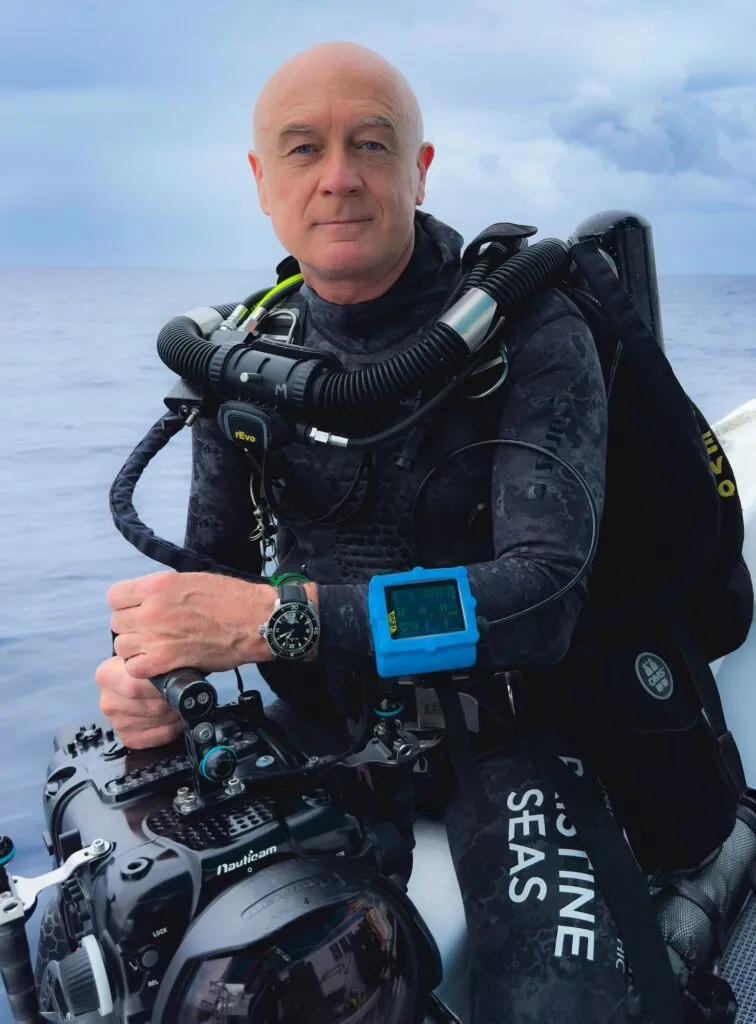
« Sfruttando le nostre competenze e con l’aiuto di volontari, We have begun planting Posidonia (Editor’s note: the famous aquatic plant endemic to the entire Mediterranean Basin and an “ambassador” for unpolluted waters capable of producing large amounts of oxygen). Our goal is also to encourage people to experience firsthand the benefits of a healthy sea: more marine life, more fish, better water quality, and, ultimately, a Mediterranean that we can enjoy even more. ", he explains to us in an exclusive interview Manu San Félix, marine biologist, reporter An underwater photographer and National Geographic contributor with more than twenty-five years of experience. Manu is convinced that the boating industry can become a key ally in the protection and restoration of the Mediterranean, driving tangible change toward greater sustainability.
« (…) A sailor can become one of the ocean’s greatest allies. But for that to happen, we must also educate sailors, boat owners, captains, and marinas how they can actively participate in his recovery. And that is exactly what we are trying to do with our project: bring people closer to the Mediterranean and make them active participants in its care and protection", adds the marine biologist. Decarbonization is essential. However, it must go hand in hand with the protection of biodiversity, through the restoration of degraded ecosystems and the effective protection of at least 30% of the oceans (Editor’s note: as enshrined in the Kunming-Montreal Global Biodiversity Framework, adopted in 2022). Years of field experience, a genuine passion for the Mediterranean, and an empathetic approach to marine ecosystems lead Manu San Félix to conclude: “How easy it is to destroy, and how hard it is to restore! That’s why the most important thing is to protect what we have.”
And this also involves education and direct engagement, transforming a passion for the sea into concrete action by involving the younger generations, adults, and volunteers in the restoration of Posidonia. In this way, an authentic connection with the marine environment is forged, as it is based on protecting what we know, love, and find comforting. TheMonaco Yacht Showonce again proves itself to be aprivileged messengerof a new concept of responsible luxury: not a sacrifice of performance, but a redefinition of it throughefficiency, energy recovery, digitization, circularity, and environmental protection.