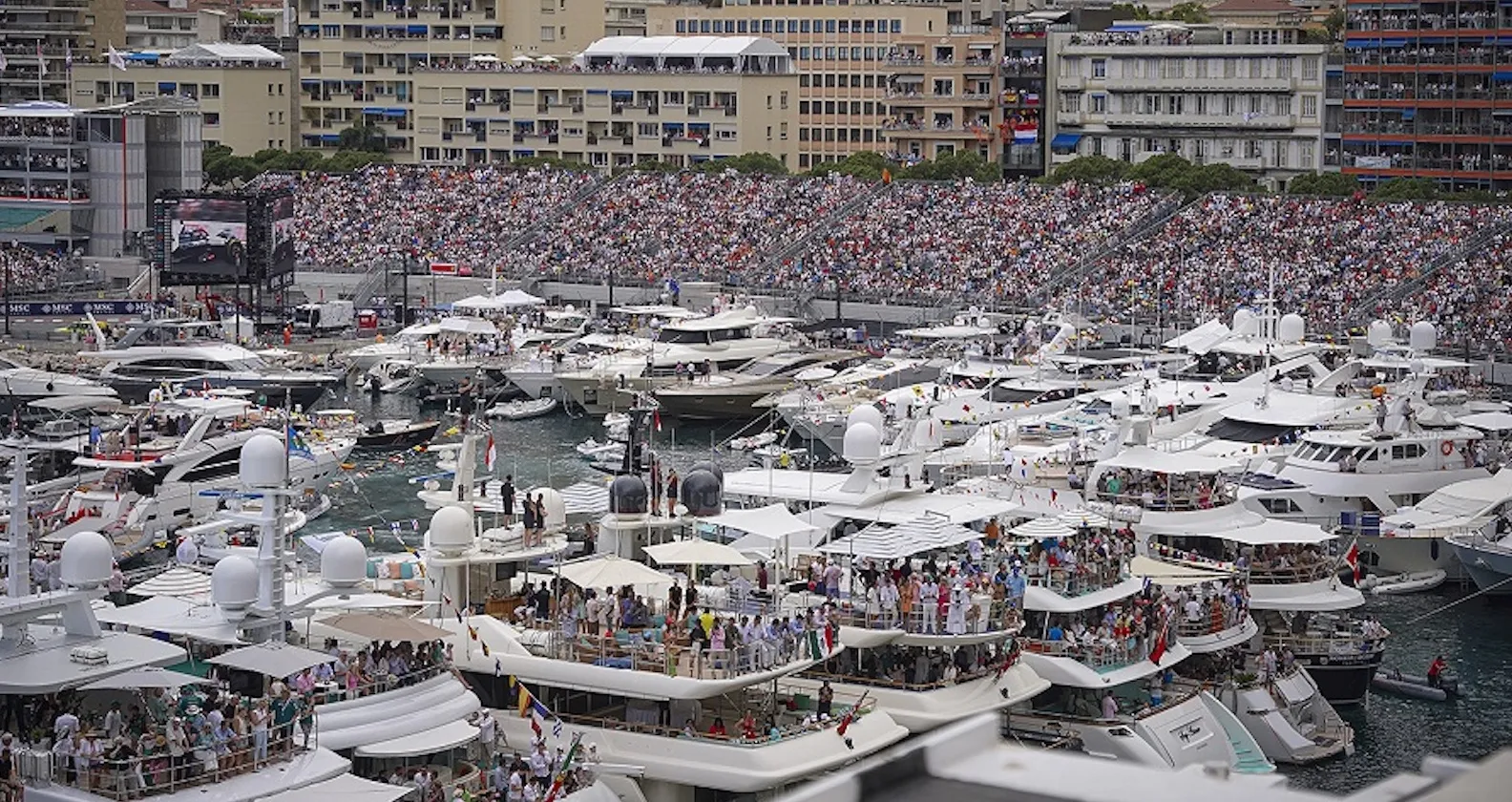
Formula 1 is gaining momentum, and after the first 14 races of the 2026 season, it has surpassed the World Cup in viewership. The numbers speak for themselves: with 4,644,549 spectators in the stands at recent championships held in the U.S. (breaking the previous record of 3.6 million, also set in the U.S. during the previous edition, according to FIFA data), F1 has responded with over 4.7 million spectators across the first 14 races of the season—an 8.3 percent increase compared to a year ago. And the figures for the season’s final races are still pending. Here, too, the events are expected to be sold out, as confirmed by Liberty Media’s CEO,Stefano Domenicali, during an appearanceon theJimmy Fallon Show on U.S. TV: “We’re sold out for the U.S. races in Las Vegas and Austin; if anyone wants to come, they’d better hurry because the organizers tell us there are no tickets left.”
This year saw attendance records broken at 10 circuits: Australia (484,000 attendees), Canada (360,000), and Austria (320,000), with the highest attendance recorded at Silverstone at 564,000, while Monza drew 403,000 spectators, far surpassing last season’s already impressive result. Not to mention the final race in the Netherlands—which will no longer be on the calendar starting next year—which drew 325,000 spectators, as well as Hungary with 310,000 attendees and, most recently, Malaysia (221,000 compared to 101,000 in 2017) and Singapore with over 330,000 attendees—bringing the total to nearly 5 million track attendees following the most recent Asian races.
A global success that is also reflected in TV ratings. In Italy, the “Kimi Antonelli effect” boosted television viewership by 25 percent, with peaks of 10.5 million viewers across Sky and TV8; worldwide, the audience watching Grand Prix races on television exceeded 1.6 billion, with a fan base of 830 million enthusiasts. This figure is particularly significant because Formula 1 boasts 11.4 percent more fans than the second-most-popular sport, the NBA, and its audience is predominantly young, with 43 percent under the age of 35, growing by 51 million each year.
Another interesting statistic is that thefemale fan base is steadily growing, with women making up 42 percent of fans compared to 37 percent in 2018—so much so that 48 percent of new fans in 2026 are women.
A young audience, active on social media, with data to back it up: 120 million people follow F1 across various platforms, up from 18.7 million in 2018, with annual growth of over 20 percent year-over-year—enough to make F1 the most-followed sport across these platforms: TikTok up 91 percent, YouTube up 53 percent, and Facebook up 51 percent.
These figures stand in stark contrast to the drivers’ own perceptions. This season, with the new rules, has drawn a lot of criticism from the champions—drivers like Verstappen, Hamilton, Norris, and Leclerc—all of whom agree that the technical regulations are flawed, resulting in artificial racing and overtaking due to batteries that run out sooner than expected. Yet the fans still flock to the races, cheer, and fill the stands.
The downside is a disproportionate increase in ticket prices. While a ticket in the central grandstand at Monza this year cost about 1,100 euros, advance sales for the 2027 Grand Prix are priced at 1,614 euros, representing an average price increase of 30 percent. Seats that were considered “popular” just a few years ago, such as those at the Ascari curves, have quickly gone from 250 euros to 786 euros! And the trend is similar at all racetracks: in Belgium, the most spectacular grandstand at Spa has gone from 606 to over 900 euros for next year—and we’re talking about top-tier grandstands here—but things aren’t any different for basic seats. It’s a perverse system in which all the money flows in one direction. Organizing a Grand Prix in Italy costs about 26 million euros in fees payable to FOM, which handles the commercial side of the Grand Prix, but abroad, costs can reach as high as 55–60 million per year with ten-year contracts—see Qatar or Abu Dhabi, not to mention the recent Madrid Grand Prix, which was secured for 48 million euros over 10 years, well above the average for European races.
But F1 has ceased to be just a sport; it is now a platform for entertainment and business networking. While inBernie Ecclestone’sera—in 2018—F1 boasted four main sponsors and a prize purse that did not exceed $800 million, today’s F1 is a formidable machine capable of generating significantly higher revenue. There are about 15 main sponsors, in addition to secondary sponsors, generating revenues exceeding $3.9 billion (2025 figures), with a 14 percent increase in revenue compared to the previous year and $1.2 billion in prize money distributed among the 10 teams participating in the world championship. Stefano Domenicali attempts to explain the rising costs: “In the past, there was only the F1 race and the supporting events; today, the Grand Prix is a full-fledged event featuring concerts and meet-and-greets with drivers in the fan zones. It’s a diversified event, and this helps explain why organizers have raised prices. We have no control over ticket sales, which are in the hands of the race organizers.”
But how long can F.1 continue to grow?Domenicali added: “Every three months we meet with shareholders to review reports; the growth figures are truly exceptional, but investors naturally always expect a return. I believe we’ll continue to see an estimated growth trend over the next five years before reaching our maximum potential, although external events—such as conflicts in the Middle East—could bring about changes. Investing in F1 today is the best thing you can do from a business perspective.” As long as the grandstands remain packed as they have been in recent races, he’s clearly right.