The way in which sustainable yachting will evolve is measured by what we are willing to change, not just by what we are capable of imagining. Amid the European Union’s regulatory ambitions, the infrastructure gaps that still exist, and the growing responsibility of the recreational boating industry (editor’s note: which is itself an integral part of shipbuilding and theBlue Economy*), theecological transition of the luxury boating sectoris at a turning point. Innovation alone is not enough; we must turn commitments into verifiable results.But who should lead this change, and how sustainable can the luxury sector truly be when environmental responsibility remains, for the most part, a voluntary choice?
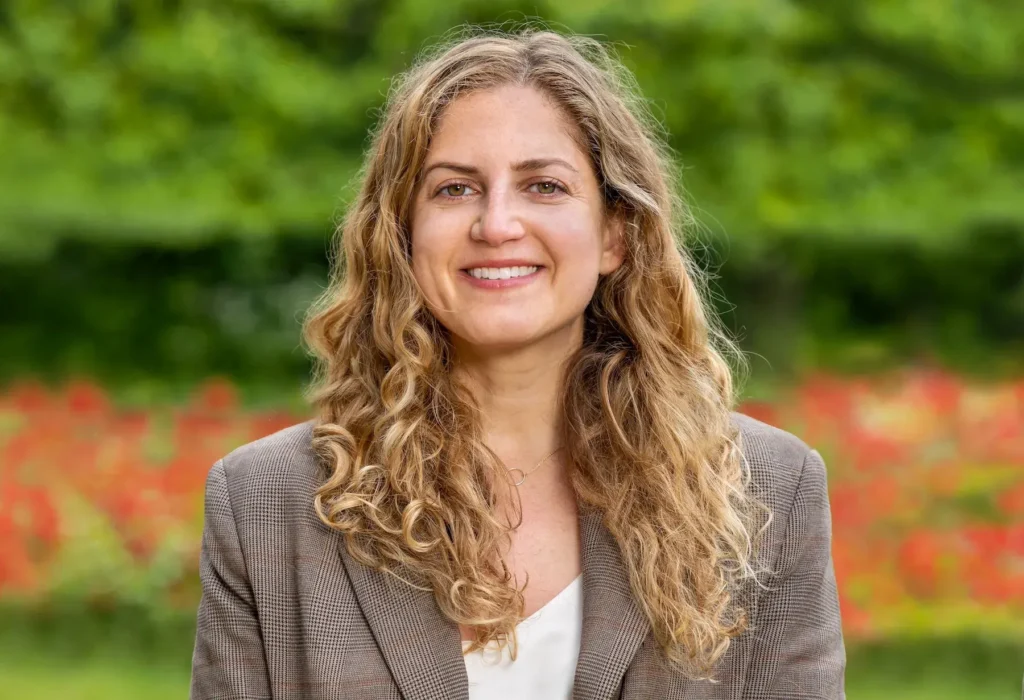
We have exclusively gathered some reflections from Dr. Leah Werner (L.W.), an oceanographer and marine biologist with over thirteen years of experience, in her new role as Executive Director of the Water Revolution Foundation—a nonprofit organization founded in 2018 and guided by scientific research, with the goal of reducing the ecological footprint of the yachting industry and preserving the oceans. It is no coincidence that, as a leading partner of the former Sustainability Hub (now the Blue Wake Awards) at the Monaco Yacht Show, she defines the eligibility criteria for companies and technologies participating in this iconic annual event, with the goal of ensuring credibility and effectiveness in terms of reducing environmental impacts (editor’s note: that is, the effects of an action, product, or technology in terms of resource consumption, emissions, and alterations to natural ecosystems).
OCM News:The Water Revolution Foundationhas developed a scientific approach to reducing the environmental impact ofyachting (andsuperyachting) throughout the entire lifecycle of vessels. The“Roadmap 2050: Towards Regenerative Yachting,” proposed by your organization, represents the first collective strategic plan aimed at eliminating environmental impacts by 2050 through a process based on quantifiable and verifiable goals. What do you consider to be the key milestones and priority actions that need to be implemented to achieve the set targets and facilitate systemic and measurable progress?
L.W.: Themost important change is moving from intentions to their actual implementation. TheRoadmap 2050provides the industry with a shared direction through the 3R model—Reduce, Remove, and Restore—applied to the entireyacht supply chain: from design to construction, through use, and on torefitting(renovation and restoration). In particular, we must ensure that environmental performance becomes an integral part of standard decision-making processes, on par with costs, quality, and safety. This means improving measurement, identifying credible solutions, and promoting much wider adoption of those already available.
OCM News:How important is standardization in enabling shipowners, shipyards, designers, and suppliers to make comparable, evidence-based decisions to improve transparency in reporting environmental performance?
L.W.: It isessential because, without asharedmethodformeasuringperformance, it is very difficult to tell whether we are actually improving or whether we are simply making different claims based on different criteria.
The ISO/TS 23099 standard, approved last February, draws inspiration from the YETI methodology—Yacht Environmental Transparency Index(Editor’s note: a scientific protocol developed bythe Water Revolution Foundationbased onthe life cycle assessment(LCA)approach, which quantifies the ecological footprint of superyachts without relying solely on carbon emissions).
The challenge now is to make environmental data more accessible and to encourage its systematic use by everyone involvedin every step of the supply chain. Greater transparency also offers the opportunity to move beyond generic
sustainability statements, focusing on tangible data that can be effectively correlated to guide informed decisions and actions.
OCM News:How can the yachting (and superyachting) industry go beyond reducing its environmental impact and contribute to the conservation and restoration of marine ecosystems?
L.W.: Thefirst form of responsibility is to reduce the impact generated by the industry itself. But that cannot be the only goal. ThroughOcean Assist, we are exploring ways to make a concrete contribution to the conservation and restoration of marine habitats. We focus on projects grounded in solid scientific foundations and capable of producing measurable ecological results, ensuring that marine biodiversity conservation is not reduced to a mere form of environmental impact offsetting. In this way, we aim to contribute toocean conservationnot only through financial resources, but alsothrough networksof experts, expertise, and technologies to raise awareness of the issue.
The ambitious long-term goal is to transform the sector: from one that benefits from the resources and services provided by the oceans to one that actively contributes to their health and regeneration.
OCM News::In your capacity as Executive Director of the Water Revolution Foundation, what changes—both in terms of people and operations—do you believe are essential to integrating environmental responsibility into the culture of (super) yachting?
L.W.: It is important torecognize that environmental performance does not depend solely on major technological choices, but also, to a large extent, on the decisions made every day on board the vessel. Crews play a fundamental role, as they are the ones who manage theyacht on a daily basis, make decisions regarding energy and water consumption, waste management, procurement, maintenance, and many other management activities.
To embed environmental responsibility intothe onboard culture, it is necessary to provide the knowledge, tools, and safety standards required to make more informed choices. Change will occur when good environmental practices are no longer perceived as an additional burden but are instead integrated intothe managementof an efficient and well-organized yacht.
As the Executive Director of the Water Revolution Foundation reminded us, the evaluation of an environmental solution must be based on evidence that is also capable of identifying—from the very beginning of the production process—any potential negative impacts on the environment at every subsequent stage. Such an approach—already pursued by the Hub of Verified Solutions (editor’s note: an online database that displays and verifies the environmental performance of products, systems, and materials used in the boating and superyacht sectors)—should ideally be maintained throughout the entire supply chain, making each assessment a driver for accessible and progressive improvement toward a concrete minimization of the ecological footprint and mitigation of environmental impacts.
Notes:*TheBlue Economyrefers to a growth model that harnesses the potential of seas, oceans, and coastlines through the use of