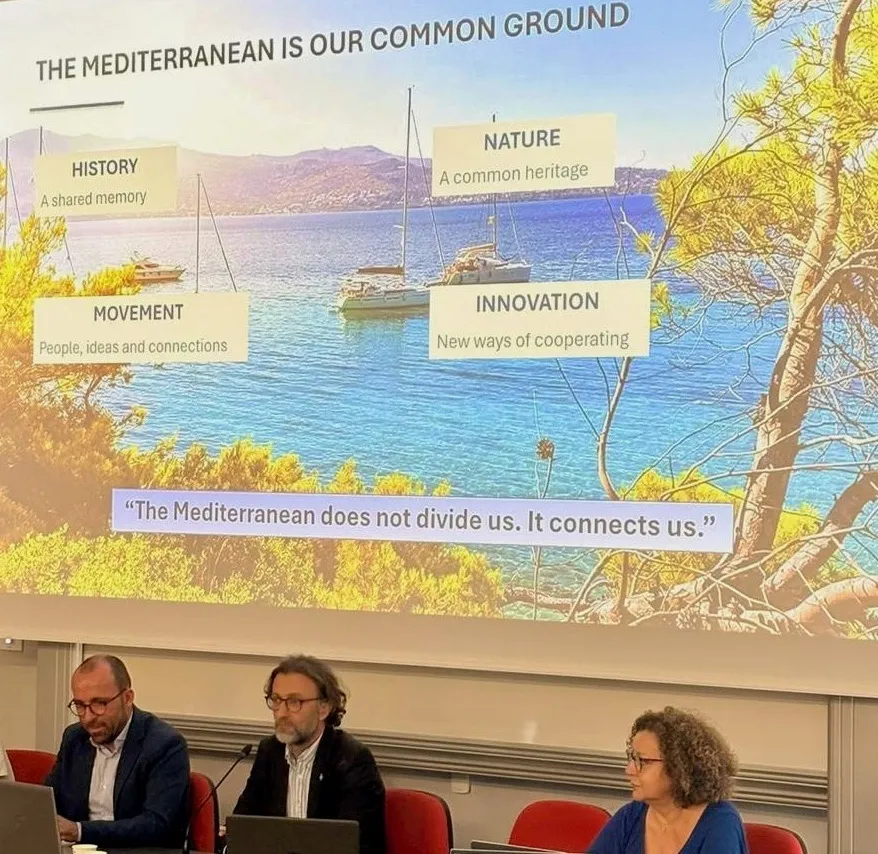
The first Forum of UNESCO Chairs of the Mediterranean (University of Corsica "Pasquale Paoli", Corti, 8-11 September 2026) devoted extensive space to the various theoretical and practical aspects of heritage: from the anthropology of heritage transmission to intangible heritage in its performative forms. This is the context for the presentation of the "Offroad Club Monaco" project ( OCM official website ), presented in the final session on 11 September 2026, dedicated to Mediterranean cooperation in the "UNESCO 80" strategy.
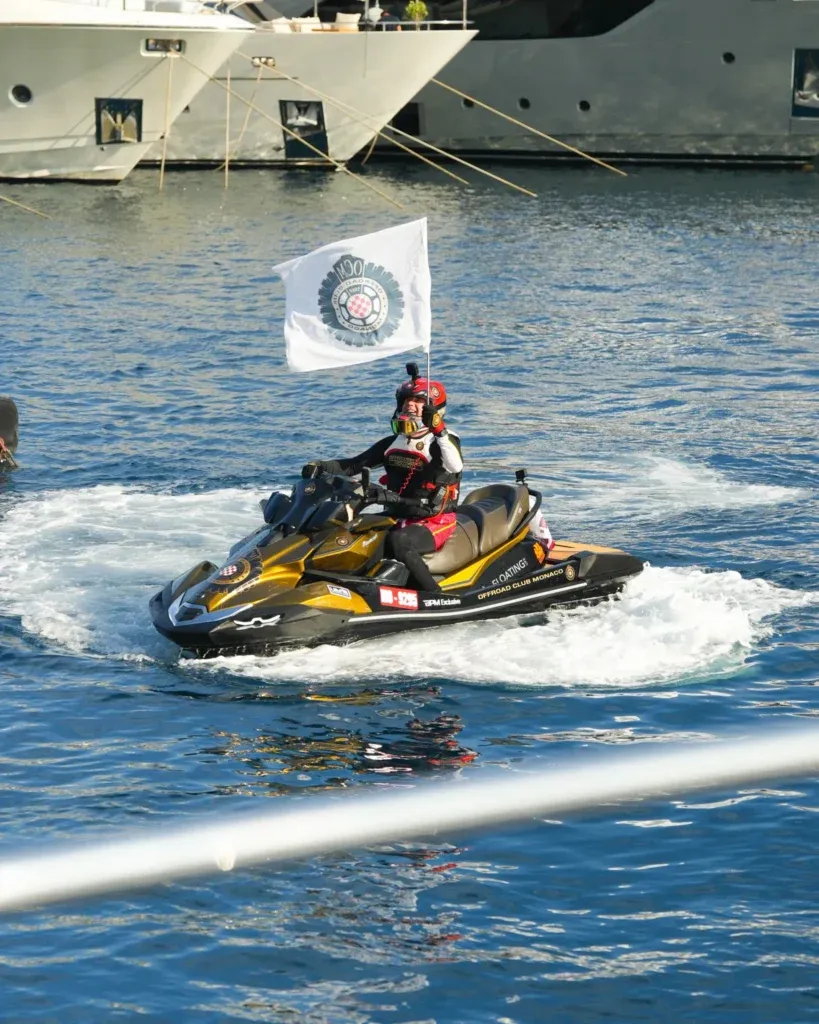
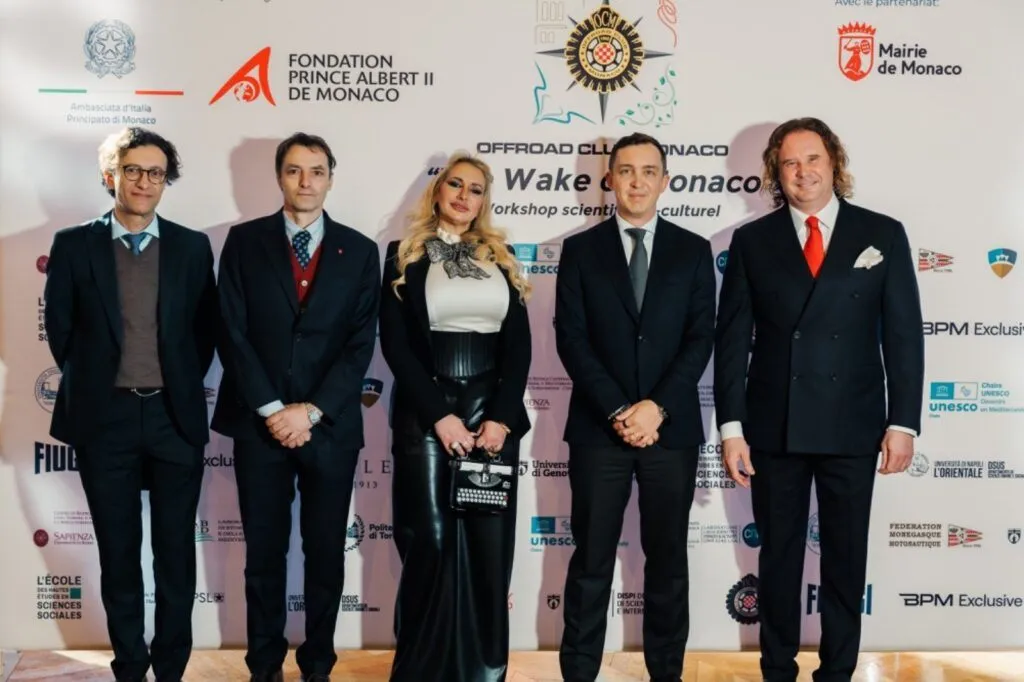
The Corsican stage is the final stage of a scientific-cultural journey that began in the Principality on March 11, 2026, with the first international OCM workshop, "The Wake of Monaco," hosted in the conference room of the Oceanographic Museum of Monaco. This event explored the theme of off-road sports performance as a living and intangible heritage, starting with a concrete performance: the record set by Massimiliano Mordenti, a pilot for the Monegasque Powerboating Federation (and co-founder of the Offroad Club Monaco, along with Erminia Fezia Mordenti), who on September 15, 2025, completed the Monaco-Gallinara Island route and back on a jet ski powered by 100% bioethanol with a spill-proof refueling system made from recycled materials. This sporting feat, realized with the support of the Prince Albert II Foundation and the patronage of the Italian Embassy in the Principality, received recognition from the Union Internationale Motonautique, in an event where competitive performance becomes a story of the sea, the Ligurian coast, and the responsibility toward the ecosystem that makes it possible. In May 2026, the OCM project was presented at the XXI Barleti Scientific Forum, at the University of Tirana, within the context of dialogue and cooperation on the Adriatic and Ionian shores, before arriving in Corti, Corsica. The thrust of the proposal is clear: to consider competition and outdoor performance not as mere recreational activities, but as a form of performative, intangible heritage in itself. Each "off-road" discipline brings with it technical knowledge, gestures, rituals, languages, and community memories that are passed down from generation to generation, just like the musical, festive, and traditional practices expressly protected by the 2003 UNESCO Convention. In the case of Monaco, this lived heritage is intertwined with the naturalistic, architectural-cultural heritage of a small state that, since the Middle Ages, has been a Mediterranean symbol of shared historical heritage, and which, through the Oceanographic Museum and the Prince Albert II Foundation, has made marine conservation an international calling.
The initiative's objectives are threefold. The first is scientific: building, with the network of UNESCO Chairs, a research framework for sports practices as heritage, capable of documenting, cataloging, and connecting them with the communities that preserve them. The second is environmental: turning sporting endeavors into laboratories for sustainability—from alternative fuels to reducing the impact on coastal and mountain ecosystems—following the example of Massimiliano Mordenti's record. The third is cooperative: connecting Monaco, Corsica, Italy, and the Mediterranean basin in a network of events, workshops, and performances that use sport as a vehicle for narrating and protecting the Mediterranean "liquid continent," open to the most authoritative universities and institutions on both shores.
The timing is also particularly favorable. Pope Leo XIV's visit to UNESCO's headquarters in Paris on September 25 brought the connection between culture, education, and peace back to the forefront of international attention, recalling the Organization's founding principle: "since wars arise in the spirit of men, it is in the spirit of men that the defenses of peace must be placed." The Pontiff recalled that "man lives a truly human life thanks to culture" and called for a unity "that does not erase differences, but values the personal history of each individual and the social and religious culture of each people": words that are well-suited to a Mediterranean understood as a plural space of shared heritages. Soon, on November 28, Mediterranean Day, to be celebrated in Paris, the official headquarters of UNESCO, will offer a further opportunity to bring experiences like that of Monaco to the attention of international institutions.
In line with the joint declaration that closed the Corsican Forum, the Offroad Club Monaco's experience demonstrates how academic research and lived heritage, here expressed through performance and sporting perspectives, can remain firmly intertwined in the shared narrative of the Mediterranean. The next step is to give this connection a stable form: a cooperative network that, from Monaco, speaks to the entire "Mare Nostrum."
Prof. Andrea Carteny,Sapienza University of Rome (CEMAS Research Center for International Cooperation, SARAS Department—History, Anthropology, Religions, Art, and Performing Arts), Coordinator of the Permanent Academic Committee of the Offroad Club Monaco.